Should we give up on E-Methanol and CO₂ utilization?
Liquid Wind, a Swedish developer of E-Methanol projects, filed for bankruptcy. While Green Methanol is an important climate solution, is it time to ask whether making it from nothing but CO₂, Water, and Electricity is the right approach?
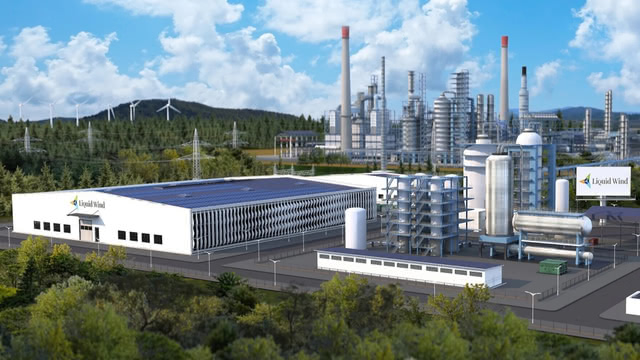
Their plans were ambitious. Liquid Wind, a startup based in Gothenburg, Sweden, wanted to build multiple large-scale E-Methanol plants, utilizing biogenic CO₂ and green Hydrogen. However, in all likelihood, those plans will not materialize. Liquid Wind declared bankruptcy on May 11.
Liquid Wind was a significant player in the European Green Methanol space. Regular readers of this newsletter will be aware that Green Methanol could be a key technology for a future beyond fossil fuels. It can serve as a clean shipping fuel and as a feedstock for sustainable aviation fuels and green chemicals.
However, making Methanol or other energy-rich molecules from nothing but water, CO₂, and green electricity poses significant challenges rooted in the thermodynamics of the process.
In my last newsletter, I discussed how Chinese companies are investing massively into Green Methanol technologies, and how others are falling behind. Earlier this year, Vioneo, a startup with ties to the shipping company Maersk, decided to build an innovative factory for Methanol-based green chemicals and plastics in China and not, as they originally intended, in Europe.
To a large degree, this decision came down to the fact that there is hardly any Green Methanol supply in Europe yet. To cite myself: "Europe's failure to kickstart a Green Methanol production industry leads to a failure to attract innovative downstream businesses like Vioneo, which seeks to utilize Green Methanol for a premium market willing to pay for fossil-free alternatives."
I promised to follow up with an analysis of why Europe failed to kickstart a Green Methanol industry. I did not anticipate that one of the most significant project developers for Green Methanol projects in Europe would go bankrupt just weeks later, but, well, here we are.
Liquid Wind was created in 2017
The story of Liquid Wind starts in 2017, when a group of people from various companies explored the option of large-scale Methanol production from CO₂ and Green Hydrogen - made with green electricity — in a pre-feasibility study. These days, we commonly refer to this process as E-Methanol.
The company Liquid Wind was subsequently founded by Claes Frederikson, who had previously worked in various roles in the renewable energy industry. Frederickson discusses some of the company's early history in this 2022 podcast interview.
Liquid Wind was not the first company to pursue such ideas. Carbon Recycling International has been operating a small-scale pilot plant with a similar approach in Iceland since 2012. (Liquid Wind's original pre-feasibility study lists an employee of Carbon Recycling International as one of its authors.)
The first project by Liquid Wind was to be named FlagshipONE. It was planned to build it next to a bioenergy power plant in the Swedish municipality of Örnsköldsvik, operated by Övik Energi. In 2022, the Danish energy company Ørsted joined the project and later acquired it completely. Ørsted announced a "final" investment decision and broke ground in 2023, but then stopped the project in 2024.
Liquid Wind tried to revive the project later and, just days before the company's bankruptcy, filed an application for an environmental permit.
As the name FlagshipONE already implies, it was supposed to be the first of many similar projects. All of Liquid Wind's projects followed a similar concept. They needed CO₂, preferably from biogenic sources, so they co-located their projects at bioenergy or waste-to-energy plants.
When it went bankrupt, Liquid Wind had planned five projects in Sweden and Finland, all following a similar blueprint.
One of the projects in Sweden is owned by the energy company Uniper. Liquid Wind was supposed to develop the project. "We continue running the NorthStarH2 project according to plan," Uniper spokesperson Désirée Liljevall wrote in response to questions about the project's status. "Our goal remains to have the E-Methanol production facility in Östersund operational around 2029-2030. The project is not affected by Liquid Wind's bankruptcy."
Liquid Wind's bankruptcy likely had multiple reasons. Its early ambition was probably driven by expectations of a more ambitious EU climate policy and support for Hydrogen. I covered some of that in the context of Ørsted's FlagshipOne cancellation. Its decision for power plants as its CO₂ source was not ideal. Nevertheless, Liquid Wind's bankruptcy is part of a larger pattern.
E-Methanol announcements thrived during the early 2020s Hydrogen hype
Liquid Wind was one of the early players in this space, but in the early 2020s, plans for E-Methanol began to appear in significant numbers. In one of my earliest newsletters in June 2023, the back-then latest round of the EU Innovation Fund — one of the key funding instruments for large-scale cleantech projects in Europe — included four large-scale E-Methanol projects. Overall, dozens of such projects have been announced in recent years, most of them in Europe.
This interest in E-Methanol can, to a large degree, be attributed to the increasing interest in Hydrogen at that time. There is some logic to that. Hydrogen is notoriously difficult to transport and store. If one asks what to do best with Hydrogen, the idea of converting it into a liquid which is much easier to handle is not far-fetched. One wonders, however, whether that was even the right question to begin with.
The Hydrogen hype was followed by a Hydrogen hangover, and E-Methanol wasn't spared. Most of these projects do not appear to make any notable progress, and many have been halted. Only one Green-Hydrogen-based E-Methanol plant of any significant size is operational worldwide: European Energy's Kassø PtX plant in Denmark.
The brutal thermodynamics of CO₂ utilization
E-Methanol is part of a set of technologies that are known as Carbon Capture and Utilization (CCU), E-Fuels, or Power-to-X/Power-to-Liquid (PtX/PtL). There are some subtle differences between these terms, and not everyone uses them consistently. However, broadly speaking, they largely refer to the same technologies.
These technologies face a challenge that no amount of innovation will change: they need enormous amounts of energy. What they are trying to do is to create energy-rich molecules from two molecules that contain practically no usable chemical energy: water (H₂O) and Carbon Dioxide (CO₂).
It is inevitable that converting those into high-energy molecules like Methanol requires sourcing that energy from external sources, including unavoidable process losses. Among the commonly discussed CCU processes, E-Methanol is still among the most favorable in terms of energy efficiency.
The thermodynamics are brutal. A study published in the scientific journal PNAS (Kätelhön et al., 2017) estimated that transforming the global petrochemical industry to E-Methanol-based processes would require between 17 and 32 Petawatt-hours of clean electricity. To put that in perspective: today, the world's total electricity production is around 30 Petawatt-hours.
Adding shipping and aviation, we are easily talking about adding multiple times the world's current electricity production for the synthesis of Methanol and other E-Fuels and E-Chemicals. It is difficult to contemplate that this is feasible.
Those energy requirements make projects difficult to realize, as the high energy requirements translate into electricity costs, driving up the price of E-Methanol.
The response to this is often to point out that renewables are getting cheaper (true, but not cheap enough) and that renewable electricity is often curtailed and, sometimes, electricity prices are even negative. Who wouldn't want to make Hydrogen and E-Fuels from excess solar energy when you get paid to use it?
However, such ideas face multiple problems in practice. Electrolyzers have significant capital costs. The economics of running them only during hours where green electricity is cheap or free are unlikely to work out. Furthermore, adding flexibility requires electrolyzers that can be ramped up and down frequently (not all of them can), and downstream processes (like Methanol synthesis) need to be either flexible or Hydrogen needs to be stored, which also adds costs.
The idea of making Hydrogen, E-Fuels, and E-Chemicals from excess free renewable electricity sounds nice in theory, and adding some flexibility may help. But it is not saving E-Methanol from the inevitably high electricity costs.
If turning low-energy molecules like Carbon Dioxide and water into E-Chemicals and E-Fuels is not practically feasible, the alternative is asking which molecules that already contain energy can be utilized instead.
The quest for renewable molecules
The transition to clean energy will be largely driven by renewable electricity generation and the electrification of processes. But this approach has limits, and they largely come down to the need to transport and store energy in situations where direct electrification and batteries are infeasible and the need for chemical feedstocks that currently rely on fossil feedstocks.
This has sometimes been described as a need to complement the energy transition with renewable molecules.
There is a form of renewable molecules that already exists: biofuels. However, there has been a significant and largely well-deserved backlash against biofuels.
Biofuels and bioenergy are often described as climate-neutral because plants take up CO₂ from the air through photosynthesis. Carbon that is released when burning those plants is the same carbon that those plants took from the atmosphere while growing.
There are many caveats with this.
The biggest issue with traditional biofuels is land use. Plants need space to grow, and lots of it. Photosynthesis is, ultimately, not a particularly efficient way to collect solar energy. Land use needs are often framed as a "food versus fuel" debate, but they can also defeat the purpose of biofuels: land use causes emissions in multiple ways.
In some cases, this is rather obvious, for example, if land to grow biofuel crops has previously been a forest storing carbon. A lesser-known issue is that large amounts of agricultural land are on dried peatlands, which are a constant source of greenhouse gas emissions — around 4 percent of worldwide greenhouse gas emissions are caused by drained peatlands.
Most biofuels contain fossil fuels
The production of biofuels also involves fossil fuels in multiple ways. It starts with nitrogen fertilizers made from fossil gas.
Refinery processes like hydrogenation use Hydrogen, and that is, these days, by and large also made from fossil gas. (Hydrogenated Vegetable Oil, or HVO, a common type of biofuel, even has this in its name.)
Furthermore, a sizeable share of the world's fossil Methanol production — usually also made from fossil gas — is used for the production of Biodiesel in a process called transesterification.
In other words, most of today's biofuels contain fossil fuels.
All of these issues result in a situation where it is far from clear whether biofuels even have lower total emissions than fossil fuels. This is not a new insight. For example, a 2008 publication by the European Union's Joint Research Centre concludes: "The uncertainties of the emissions due to indirect effects, much of which would occur outside the EU, mean that it is impossible to say with certainty that the net greenhouse gas effects of the biofuels programme would be positive."
In those years, it was promised that these issues would soon be solved by better biofuels: "second-generation" or "advanced" biofuels, made from waste products, not crops, or from plants that can grow on less valuable land and don't compete with food or natural carbon sinks.
High hopes were placed in cellulosic biomass such as straw and wood. Traditional biofuels, even if they are made from waste products, usually rely on inputs that are fats or sugars. However, most biomass is not like that. Most molecules that plant photosynthesis produces end up in cellulosic materials.
Second-generation biofuels never came, because first-generation biofuels never left
There is just one problem with those advanced, cellulosic biofuels: they were never produced in any meaningful quantities. This is not just a technical failure. Second-generation biofuels never came, because first-generation biofuels never left.
The problems of crop-based biofuels and the need to develop advanced cellulosic biofuels have been known for decades. Yet, to this day, the majority of biofuels are made from corn, soy, or sugar beet. It is often not even clear if they provide any emission savings at all, but they still receive generous subsidies. One has to wonder why.
The European Union has, in principle, the goal to move beyond that. The EU's Renewable Energy Directive has a definition of advanced biofuels with separate quotas, allowing them to be sold at a premium. But the definition is so broad that it is, in itself, hugely problematic.
One of the most problematic and controversial sources of biofuels is palm oil due to its impact on rainforests and deforestation. The European Union has responded and, in principle, banned palm oil biofuels. But it left a loophole.
While the use of palm oil as a fuel is extremely problematic, its use as a food source is not considered equally controversial. Therefore, waste feedstocks from either the production of food palm oil (POME / Palm Oil Mill Effluent) or its use (UCO / Used Cooking Oil) are still allowed, and even count as "advanced" biofuels.
What followed is a textbook example of perverse incentives. When one incentivizes the use of "waste" products, one should probably not be surprised to find out that, mysteriously, more "waste" is created.
In recent years, implausible volumes of Palm Oil Mill Effluent and Used Cooking Oil have appeared on the market, raising concerns that significant portions of the supposedly better "advanced" biofuels were actually virgin palm oil. A Swedish television station recently showed footage of a used cooking oil collection point in Malaysia where virgin palm oil was accepted without any checks.
These issues with fraud are obviously a problem, as they undermine the purpose for which biofuels are supported in the first place. But they have another, more insidious effect. They undermine the development of better alternatives.
Remember that the bulk of the world's biomass is cellulosic material. However, UCO, POME, and most other advanced biofuels sold today are not from that category. They are still based on plant oils or sugars.
While fraud risks affect every feedstock, and there certainly need to be guardrails against it, one can have some optimism that sustainability criteria could be enforced more plausibly with feedstocks like cellulosic biomass that are simply more widely available. Furthermore, redirecting wood and straw from existing low-value energy uses or even open combustion for disposal can have important co-benefits by avoiding air pollution.
Why we never got cellulosic biofuels
While cellulosic biomass was long considered a promising option for scalable, more sustainable biofuels, the technology has, by and large, not materialized.
There are two main approaches for cellulosic biofuels. Cellulosic ethanol through fermentation and biomass gasification. (There is also a hybrid of the two.) Both approaches have been tried many times. Most of these projects have either not worked or have been shut down after relatively short amounts of time.
There are not many efforts these days to invest in and build cellulosic ethanol plants, and they are more limited in their feedstocks than gasification plants. Despite its history of failures, gasification is still the most plausible contender for truly advanced biofuels.
Gasification is a technology that converts carbon-containing feedstocks into simpler molecules using high-temperature heat. The result is a gas rich in Hydrogen and Carbon Monoxide, which is also called syngas. These days, its most prevalent use is coal gasification, which is the basis for a significant share of the chemical industry in China.
Gasification of biomass is more challenging, but it is the key technology for many approaches to utilize a wider variety of biogenic resources for biofuels and biochemicals. (Closely related is the gasification of mixed waste for chemical recycling. As we are primarily interested in utilizing "waste" / residual biomass, there is no strict line to draw between waste and biomass gasification.)
Both waste and biomass gasification technologies have a long history of failed projects. The technology is challenging, particularly if the goal is to synthesize chemicals or fuels from the resulting syngas. It requires a complex gas-cleaning process that has broken many projects. Furthermore, with biomass from dispersed sources, considerable infrastructure challenges need to be solved.
While there is no denying that gasification technology is complex and poses technical challenges, it is not impossible to operate advanced gasification plants with reasonable success. Resonac in Japan has used gasification to produce chemicals like Ammonia and Acrylonitrile from waste since 2003. (Back then, the company was named Showa Denko.)
Technology developed during the Cold War in the German Democratic Republic (GDR) was later used in a Waste-Gasification-to-Methanol plant named Sekundärrohstoffverwertungszentrum (SVZ) Schwarze Pumpe that operated reasonably reliably between 1997 and 2007 in Spremberg, Germany. While there were caveats — the plant relied on mixing waste with coal — it is worth asking what could have been if it had been recognized early that this is a key technology worth pursuing and improving.
But the SVZ plant, which can justifiably be called one of the earliest and most successful chemical recycling plants, was not economically viable and outcompeted by virgin Methanol made from fossil fuels.
While the technological challenges of gasification are undeniable, biomass gasification was also in a challenging spot in terms of policy. While the need for cellulosic biofuels was recognized early, first-of-a-kind plants were asked to compete with crop-based biofuels that never left. An overly broad definition of advanced biofuels did not help either.
I heard that directly from a project developer. "With gasification, we cannot compete with used cooking oil at current price levels," Eric Matsgård from the SAF developer Braathens Renavia told me.
(Braathens Renavia plans to build a waste-gasification-to-SAF project called Green Birch in Umeå, Sweden. It is the same location where Liquid Wind wanted to build one of its E-Methanol plants. While gasification is likely the right approach for SAF, one can have concerns whether gasifying mixed waste, including fossil-derived plastics, should be called sustainable aviation fuel.)
E-Fuels to the rescue — or not
The significant and well-deserved pushback against first-generation biofuels, the fraud, and the unfulfilled promises of second-generation biofuels has led many to seek an alternative. E-Fuels — like E-Methanol — promised to be that alternative: a way to turn renewable electricity directly into fuels and chemicals, bypassing all bioenergy controversies.
As already discussed, given the amount of energy required, making E-Fuels work is barely feasible. But there is another problem, one that challenges the promise that E-Fuels free us from any worry about the problems of bioenergy. They need a source of Carbon Dioxide.
Taking CO₂ from fossil sources or even cement plants is not a true solution. While that can theoretically reduce emissions, it is not emission-neutral. It still ends up in the atmosphere as Carbon Dioxide, it just gets reused on its way there.
Any truly sustainable CCU technology needs a different source of CO₂ — one that was already part of the atmosphere. There are only two options for that: CO₂ from biogenic sources or direct air capture. At least today, direct air capture is wildly impractical. The most successful direct air capture company, Climeworks, has, to this day, only captured around 2,000 tons of CO₂ from the atmosphere with its two plants in Iceland.
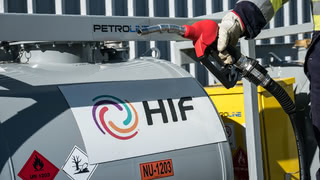
The E-Fuels project Haru Oni in Chile was initially marketed with misleading claims that it was using direct air capture. However, even for a tiny pilot project, they had trouble finding anyone selling them a working direct air capture plant. HIF, the company behind the project, has announced multiple partnerships with different companies over the years for the construction of a direct air capture plant. Apparently unsuccessful: to this day, they have not announced the startup of a direct air capture facility.
Whether direct air capture will ever play any significant role in the production of E-Fuels (or any role at all) is doubtful. Today and for the foreseeable future, it is simply not a credible option. While it is certainly not impossible to separate CO₂ from the air with enough effort and energy, the costs will, in all likelihood, remain high.
E-Fuels cannot escape from the biosphere
That leaves CO₂ from biogenic sources as the only practical option. E-Fuels cannot escape from the biosphere. For any biogenic CO₂ source, the same questions about the sustainability of its sources need to be asked that make biofuels so controversial.
Even if we settle on biogenic CO₂ sources, there are vast differences between them. The most naive approach — and the one Liquid Wind chose — is to tap into the flue gas of a power plant burning biomass. However, post-combustion carbon capture requires costly gas-separation steps, as a power plant's flue gas is composed of a mixture of Nitrogen, Oxygen, CO₂, and other trace components.
Much more favorable sources of biogenic CO₂ are processes that already generate a stream of concentrated CO₂ — like Biomethane upgraders. European Energy's plant in Kassø, Denmark, uses CO₂ from the nearby Tønder Biomethane plant.
Confusingly, in EU policy terms, Hydrogen-based fuels are part of what is called RFNBOs, which stands for "Renewable Fuels of Non-Biological Origin", even though, in many cases, they would be made using biogenic CO₂. The "Non-Biological Origin" only refers to the energy source.
RFNBOs got something that advanced cellulosic biofuels never received: dedicated policy support within the EU through quotas. If those policies are not dismantled, there will be some market pull in the upcoming years.
Advanced Biofuels, E-Fuels, or both?
Given that E-Fuels will likely remain prohibitively expensive, it is not far-fetched to ask whether we should seek the solution that was promised so long ago, but never came due to unfavorable conditions: biofuels from residual cellulosic biomass. The key technology to make that happen is gasification.
When we want to serve shipping and aviation fuels, chemicals, and potentially other use cases like energy storage and carbon removal with residual biomass, an obvious follow-up question becomes whether there is enough of it. Estimates for the available sustainable biomass differ widely due to various assumptions about the practicality of collecting biomass from dispersed sources and what counts as residual or sustainable.
Energy modeler Tom Brown recently shared some estimates taking the variability of estimates into account. In summary, there is probably enough carbon in residual biomass for all the above use cases, but not comfortably so, and only if the carbon is used efficiently.
Gasification turns its input into syngas, a mixture of Carbon Monoxide, Hydrogen, and Carbon Dioxide. Due to the chemical composition of cellulosic materials, the ratio of Carbon Monoxide to Hydrogen molecules is usually not ideal for the desired outputs like Methanol — there is a lack of Hydrogen. It is possible to correct this by reacting excess Carbon Monoxide with water in a Water-Gas-Shift reaction, but that creates more CO₂, decreases the carbon efficiency of the process, and increases concerns about biomass availability.
An alternative possibility that increases carbon efficiency and retention is to enhance the syngas with additional Hydrogen. We can even split that up into two ideas: adding enough Hydrogen to make sure all Carbon Monoxide (CO) molecules are utilized and the Water-Gas-Shift reaction can be skipped, or adding even more Hydrogen to utilize the remaining CO₂. Which one to choose may well be decided individually based on the availability and cost of Hydrogen.
(There are also questions regarding the energy source for the gasification process that impact carbon efficiency and CO₂ generation. Electrification is another way to reduce CO₂ generation and improve carbon efficiency.)
Hydrogen-based E-Fuels need a preferably biogenic source of CO₂. Gasification-based advanced biofuels produce excess CO₂ and can utilize additional Hydrogen for added carbon efficiency.
Taking this together, the latter may be the smartest idea. It is no longer a biofuel or an E-Fuel. It is both at the same time. Such technologies for combined Bio-E-Fuels have also been called Power-and-Biomass-to-Liquids (PBtL).
Enhancing gasification syngas with Hydrogen is not the only such combined pathway for Bio-E-Fuels. For example, biogas from anaerobic digestion can be reformed to syngas and enhanced with additional Hydrogen.
These are not new ideas. Combined Bio-E-Methanol was, for example, prominently featured in a 2021 report about renewable Methanol from the International Renewable Energy Agency (IRENA). I even found a document from 2006 describing the idea of Hydrogen-enhanced gasification.
Yet, it appears China got the memo, and Europe didn't. While Chinese companies planned and, to some degree, already built renewable Methanol plants with a variety of technologies, the majority of them use either pure or Hydrogen-enhanced biomass gasification. In Europe, most planned projects are E-Methanol plants. (You can check this by having a look at the renewable Methanol project map from the Methanol Institute.)
Possibly one of the strongest arguments in favor of such combined approaches is that even the pioneers of E-Methanol are starting to pursue them. It is probably not wrong to say that Carbon Recycling International and European Energy have done more to advance the development of E-Methanol than anyone else.
Carbon Recycling International is the early pioneer of the sector, with a pilot plant in Iceland inaugurated in 2012 and several ambitious projects in China. In August 2025, the company announced a partnership with Jilin Huajin Energy for a combined Bio-E-Methanol plant in China's Jilin province.
European Energy has built the world's only industrial-scale E-Methanol plant powered by Green Hydrogen in Kassø, Denmark. This was possible due to offtake agreements with major Danish companies, including Maersk, LEGO, and Novo Nordisk. (I have, occasionally, only half-jokingly said that the Kassø plant was cross-subsidized by Ozempic.)
In October 2025, European Energy announced plans to utilize electric steam methane reforming (E-SMR) of biogas or biomethane: "By advancing Green Hydrogen, E-Methanol, and Bio-Methanol in parallel, European Energy ensures greater flexibility across markets."
That does not mean these companies are abandoning E-Methanol, but they are diversifying their approaches towards bio-based resources.
Is there a better way than burning biomass and unburning CO₂?
All of Liquid Wind's projects were based on a similar concept: capture biogenic CO₂ from a power plant and utilize Green Hydrogen to make E-Methanol.
If we look at the thermodynamics, it raises an obvious question. Why go from biogenic molecules that already contain energy all the way down to CO₂, just to reverse that process and "unburn" CO₂ back to energy-rich molecules? Why not go for the alternative of gasifying biomass, converting only a fraction of it to CO₂, and, if feasible, increasing the yield with much smaller amounts of Hydrogen? Gasification is undoubtedly challenging, but so is capturing carbon from a mixed flue gas stream.
A recent paper published by researchers from Chalmers University raised the question of whether the EU's policy that favors RFNBOs is at odds with the EU's own efficiency goals. The researchers compared RFNBOs with other pathways, including gasification, and conclude: "The results demonstrate a fundamental inconsistency between RFNBO compliance and exergetic efficiency. Existing policies prioritize carbon origin over exergetic performance which favors electricity-intensive pathways, potentially delaying cost-effective decarbonization."
The current EU policy regime, treating RFNBOs as something special that deserves more support, pushes in the less efficient direction. The recognition of relatively inefficient biomass combustion in power plants as renewable energy is further exacerbating this. While a combined Bio-E-Fuel process can attribute a fraction as RFNBO, it is still disadvantaged over a pure E-Fuel process.
It may be time to treat true advanced biofuels, from residuals with strong, properly enforced sustainability criteria, optionally enhanced with Green Hydrogen, as the most favorable and strategically important Green Molecules of the future.
Author: Hanno Böck