Safety Issues and an Accident delayed Linde's Green Hydrogen Plant for Years
An Electrolyzer at the chemical site in Leuna, Germany, was supposed to start producing Hydrogen in 2022. Extensive repairs due to safety concerns and an accident in late 2025 caused a multi-year delay. Behind the scenes, the once close partnership between Linde and the electrolyzer manufacturer ITM Power is showing cracks.
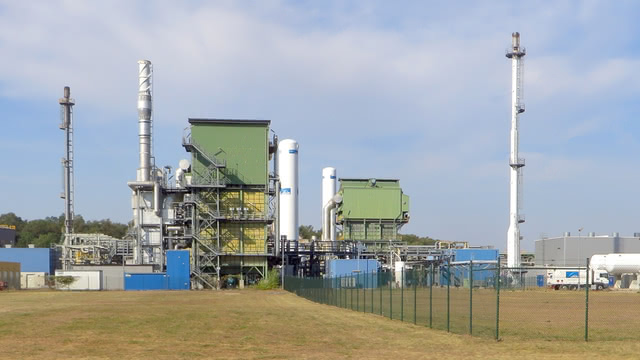
In January 2021, the company Linde announced that "it will build, own and operate the world's largest PEM electrolyzer plant at the Leuna Chemical Complex in Germany. [...] The electrolyzer will be built by ITM Linde Electrolysis GmbH, a joint venture between Linde and ITM Power, using high-efficiency PEM technology. The plant is due to start production in the second half of 2022."
Today, four years after the initially targeted production start, Linde has produced hardly any green Hydrogen in Leuna. The company has remained mostly silent about the project in recent years. With help from an inquiry by a member of the parliament of Saxony Anhalt, the state where the Leuna chemical complex is located, I can exclusively reveal details. The project was delayed by redesigns necessary due to safety concerns. Furthermore, in late 2025, an accident occured.
Linde is already a major producer of Hydrogen in Leuna. However, its production, like almost all Hydrogen production today, relies on fossil fuels. Linde's existing Hydrogen production plant in Leuna uses steam methane reforming utilizing fossil gas. While Hydrogen is often discussed as a climate solution, this existing production of fossil Hydrogen, also called "grey" Hydrogen, is a major source of CO2 emissions.
"Green" Hydrogen refers to Hydrogen made by using renewable electricity to split water into its components, Hydrogen and Oxygen, in a process called electrolysis.
An Electrolyzer instead of a new Steam Reformer
Linde's existing plant supplies grey Hydrogen to various customers within the Leuna chemical complex and a nearby oil refinery operated by TotalEnergies. A few years ago, Linde still had plans to expand its production of climate-damaging grey Hydrogen. However, Linde dropped plans for another steam reformer and instead announced its electrolyzer in 2021.
According to Linde, the electrolyzer would have the capacity to produce around 3,200 tons of Hydrogen annually. For comparison, Linde's existing fossil Hydrogen production has a capacity of around 55,000 tons. Therefore, the electrolyzer could replace around six percent of the existing fossil Hydrogen production.
Since its initial announcement in 2021, Linde has remained largely silent about the project's progress. In 2023, the public television station MDR reported on delays for the project. Linde did not comment on MDR's inquiries. However, the 2022 annual report of ITM Power, the producer of the electrolyzers, confirmed the MDR report: "Unfortunately, delivery of this project has been delayed due to a number of factors, including supply chain constraints, changes to Leuna's site requirements, and both manufacturing and testing delays."
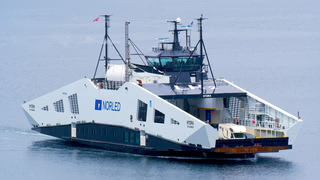
Early on, Linde had announced an offtake agreement for its green Hydrogen with the Norwegian ferry company Norled. A passenger ferry near Stavanger in Norway, the MF Hydra, was supposed to be powered by Liquefied Hydrogen made in Linde's new electrolyzer. While the MF Hydra started its service in 2023, it certainly cannot be powered by Hydrogen from an electrolyzer that is not operational. I covered the MF Hydra in 2025. Norled remains silent about the source of its Hydrogen fuel.
During my investigation into the MF Hydra, I strongly suspected that the electrolyzer in Leuna was still not operational, but I couldn't confirm it. Nobody involved wanted to answer questions about the project's status.
Linde's green Hydrogen plant received substantial subsidies from public sources. The German government and the state of Saxony Anhalt supported the project with around 15 million Euros.
Earlier this year, during a trade fair in Leuna, I received hints that there had been further delays and that the electrolyzer plant was still not operational. Kerstin Eisenreich, a member of the local parliament of Saxony-Anhalt for the Left Party (Die Linke), subsequently asked the state government several questions about the project and the subsidies.
The answer, written by the Ministry for Science, Energy, Climate, and the Environment led by the Social Democratic Party (SPD), confirms that Linde's electrolyzer plant in Leuna has still not entered regular commercial operations. According to the reply, a first attempted start-up in September 2022, still within the initially announced timeline, was interrupted.
Start-up interrupted "due to a safety-related issue"
The Ministry writes: "According to the company, operations were suspended as a precautionary measure due to a safety-related issue in order to develop a permanent technical solution. Under certain operating conditions, the intended safety-related shutdown in the event of a Hydrogen leak could otherwise have been delayed."
These "safety-related issues" required costly upgrades to the plant: "The subsequent overhaul involved extensive engineering services as well as improvement and repair measures, which were planned starting in October 2022 and implemented from April 2024. The company estimates the investment volume for this work at approximately 25% of the original total investment."
Despite these safety measures that took multiple years, in late 2025, an accident caused further delays: "According to the company, during the restart in December 2025, a further incident — unrelated to the previous one — occurred involving a Hydrogen leak and a localized fire, resulting in the implementation of additional technical measures." According to the state government, commercial operations are planned to start during the third quarter of 2026.
It may sound surprising that a green Hydrogen production plant is affected by such massive delays, technical problems, and safety concerns. While there are plenty of controversies surrounding green Hydrogen, the main criticism is usually that green Hydrogen is expensive, requires enormous amounts of renewable electricity, and that this electricity can often deliver more emission savings elsewhere. Safety risks of electrolyzers are usually not the focus of the debates surrounding Hydrogen.
Hydrogen electrolysis is an old technology. Linde is certainly experienced both in operating complex chemical plants and in handling Hydrogen.
Hydrogen electrolyzers have been used in some fertilizer plants in the past, often in countries with cheap hydropower. Although they weren't called that at the time, these historic electrolyzers were based on green Hydrogen. Unfortunately, these old green Hydrogen plants have eventually almost all been replaced by fossil fuels.
There are different types of electrolyzers, and the ones in those historic fertilizer plants used technology called alkaline electrolysis. However, Linde's project in Leuna uses Proton Exchange Membrane (PEM) electrolyzers, a much less mature technology.
Hydrogen: an Explosive Gas
Handling Hydrogen generally comes with risks due to its properties. It diffuses through many materials and can make metals brittle. Mixed with Oxygen, whether from the air or from the electrolysis separation process, it can produce an explosive mixture.
Electrolyzers split water into its components, Hydrogen and Oxygen. Due to the explosive nature of a mixture of the two, gas crossover in an electrolyzer is a potentially dangerous event that must be avoided.
Several properties of Hydrogen increase the risk. Hydrogen has a wider flammability range than most other gases. Both very low and very high concentrations of Hydrogen mixed with Oxygen can be explosive. Furthermore, the ignition temperature is quite low. Even small electric discharges can ignite it and cause an explosion. Handling Hydrogen, therefore, requires extensive safety precautions.
Even in industries with extensive experience with Hydrogen, accidents happen. In 2025, a Hydrogen explosion at a refinery in South Korea killed two workers.
Linde was also affected by an accident at its Hydrogen facilities in Leuna in 2024. This incident was likely unrelated to the electrolyzer project, at least based on publicly available information. A leak from a Hydrogen trailer caught fire. As a result, several Hydrogen transport trucks were put out of service, causing disruptions and shutdowns at several Hydrogen filling stations in Germany.
As mentioned, Linde's Green Hydrogen project in Leuna uses PEM electrolyzers, which differ from the more mature alkaline electrolyzer technology that has historically been used.
PEM electrolyzers have some properties that make them attractive for green Hydrogen projects. They operate at higher and more flexible currents. Higher currents mean that they take up less space, but the more important aspect is the flexibility. PEM electrolyzers can better adjust production to variable electricity sources like wind and solar.
Higher currents and also higher pressures in PEM electrolyzers could be a source of safety challenges. However, industry insiders I spoke to did not view PEM electrolyzers as inherently less safe than other electrolyzer technologies, which come with other safety challenges.
A challenge is that PEM electrolyzers at an industrial scale are a very new technology. While the principles behind the technology were known for many decades, until recently, they had only been tested in small lab and pilot plants.
First Industrial PEM Electrolyzer in 2021
The first PEM electrolyzer of any significant industrial size only started operating in 2021. The 10 Megawatt electrolyzer is part of the REFHYNE project at a Shell oil refinery in Wesseling, Germany. Notably, the REFHYNE electrolyzer also uses technology from ITM Power — and was also built in partnership with Linde. Shell and its partners are currently building a follow-up project, REFHYNE II, with a much larger 100 Megawatt electrolyzer.
Both the projects in Wesseling and Leuna primarily target Hydrogen use in oil refineries. One may question whether that is the best use case for scarce clean Hydrogen. It only reduces the carbon footprint of oil-based fuels by insignificant amounts and is not a long-term solution. However, discussing the best use cases for green Hydrogen shall not be the focus of this text.
Did Shell know about the safety concerns and the accident in Leuna? Shell did not want to answer that, noting that the company, in principle, does not comment on issues of its project partners.
The REFHYNE project was supported by the EU's research program "Horizon 2020". The project's final report offers noteworthy insights.
The report highlights that this was a "First of a Kind" project, which created several challenges. For example, the report notes that the original timeline of the project turned out to be "unrealistic for a project of this magnitude." Furthermore, it also notes that the electrolyzer cells were upgraded in 2023, toward the end of the research project, to ITM Power's latest technology stack.
Linde and ITM Power are partners in several other electrolyzer projects. In Lingen (Germany), the energy company RWE is building two 100 Megawatt electrolyzers with ITM Power's technology. RWE recently announced that the first shipment of Hydrogen from the project was delivered to a nearby chemical site. RWE did not reply to questions for this article.
RWE also plans to expand its electrolyzer capacity. In 2024, RWE announced the construction of a third 100 Megawatt electrolyzer. However, the third electrolyzer in Lingen will use a different technology from the company Sunfire. It uses the more mature alkaline electrolysis technology.
RWE is not alone with such a technology switch. Linde itself received a subsidy grant last year to build another electrolyzer in Leuna, although it is relatively small with 5 Megawatts capacity. It will use alkaline technology.
Another company that built electrolyzers in a partnership with Linde and ITM Power is the fertilizer producer Yara. It is located at Yara's plant in Porsgrunn, Norway. In ITM Power's 2022 annual report, this project is directly linked to the one in Leuna, mentioning that the Leuna project has been replicated in Porsgrunn. Both projects have a capacity of 24 Megawatts.
Yara officially inaugurated the electrolyzer plant in 2024. However, I could not find any numbers about its production volumes since then. Yara did not reply to questions for this article.
Initially, the electrolyzer was supposed to be only a first step toward fully converting Yara's plant in Porsgrunn to electrolytic Hydrogen. However, in an interim report in October 2024, Yara announced that these plans were shelved.
Summarizing the various projects with electrolyzers provided by the partnership from Linde and ITM Power, two are switching to alkaline electrolysis for follow-up projects and one has shelved follow-up plans altogether. Shell's REFHYNE in Wesseling is an exception as the only one with a follow-up project not switching to an entirely different technology. However, it seems likely that REFHYNE II will be one of the last projects realized by the partnership of ITM Power and Linde. To understand why, we should have a closer look at the relationship between the two.
ITM Power's Share Price and the Hydrogen Hype Curves
ITM Power has been working on Hydrogen-related technologies for more than two decades. The company was founded in 2001, initially developing Hydrogen fuel cells. Over time, the focus shifted from fuel cells to PEM electrolyzers.
Since 2004, ITM Power has been a publicly traded company. Its share price tells a story about the Hydrogen hype cycles. In its early years, ITM Power's share price rose significantly. Back then, Hydrogen was already the fuel of the future, at least that is what George W. Bush, back then president of the United States, thought.
The Hydrogen hype did not last, and ITM Power's share price fell from a high in 2006 of around three British pounds to a tenth of a British pound in 2009. In 2020 and 2021, political interest in Hydrogen rose again. Interest in PEM electrolyzers was strong, and ITM Power was one of only a few companies able to build them. Its share price rose to more than 5 British pounds in 2021. However, the Hydrogen hype slowed down, and in 2023, ITM Power's share had lost most of its peak value and was traded below one Britsh pounds. More recently, ITM Power secured additional funding from the UK government and initiate a few new projects, and its share price has recovered somewhat.
The Partnership between Linde and ITM Power is showing Cracks
In 2019, still before ITM Power's share price climbed significantly, the chemical company Linde announced it had acquired shares of the electrolyzer manufacturer. To this day, Linde is ITM Power's largest shareholder.
Both companies also announced a direct partnership for future electrolyzer projects. They founded a joint venture company, ITM Linde Electrolysis GmbH, headquartered in Dresden, Germany.
Several projects followed from this partnership, including those with Shell in Wesseling, RWE in Lingen (both in Germany), and Yara in Porsgrunn, Norway.
However, company reports published by ITM Power indicate that the relationship between the two companies became more difficult. In August 2024, an interim report by ITM Power reveals: "The Company is in a commercial dispute, the details of which are commercially sensitive."
In January 2025, another ITM Power interim report revealed that the dispute was with Linde. The two have settled the issue with a payment of 13 million British pounds from ITM Power to Linde.
ITM Power's 2024 annual report furthermore reveals that the joint venture ITM Linde Electrolysis "would honour its ongoing contracts but would not take on any further work." ITM Linde Electrolysis' former web page is no longer online.
Linde removed mentions of ITM Power from its website. An overview page about electrolyzer technology mentions Linde's project in Leuna. In 2024, it included a paragraph mentioning that ITM Power provided the technology. That paragraph has since been removed. A 2025 press release from Linde announcing the inauguration of another smaller electrolyzer project at an Infineon chipmaking facility in Austria does not mention ITM Power, even though this project also uses ITM Power's electrolyzer technology.
ITM Power's company reports contain no details about the backstory of the commercial dispute. The decision that ITM Linde Electrolysis would not take up any further projects also contained no detailed justification. We therefore do not know whether these developments have any direct connection to the safety issues at Linde's plant in Leuna.
Both ITM Power and Linde have not answered questions for this article.
Learning from Failures
It is important to highlight that technical difficulties, delays, and failures are not unusual for large industrial projects. That is even more true for "First of a Kind" projects with technologies that have not been used at an industrial scale before.
We should therefore not blame Linde for investing in Green Hydrogen technology that turned out to be much more challenging than anticipated. If anything, one could ask why such investments didn't happen much earlier.
We also should not criticize governments either for funding such projects or for pushing green Hydrogen. While many aspects of the Hydrogen hype in recent years were misguided, there are almost certainly some good use cases for green Hydrogen in a climate-neutral future.
Based on the information now available, a safety-related issue at the Leuna electrolyzer plant has been known since late 2022. We do not know whether Linde or ITM Power informed their partners at the other projects. The public, however, did not learn about it.
The project received significant amounts of public subsidies. The public deserves to know whether the projects funded with government money are operational or not - and if so, why not. This is especially true if worker's safety is affected.
In Germany, more than 300 Megawatts of electrolyzer capacity operational or under construction are using technology provided by Linde and ITM Power. That is around a quarter of all green Hydrogen projects operational or under construction in Germany. The importance of learning from such projects and their problems should be indisputable.
The problem is not that innovative green technologies funded by taxpayer money fail or face major start-up difficulties. Not learning from them, however, is a problem.
You can find a timeline of events here.
Author: Hanno Böck
Brief
-
In my previous newsletter, I covered the difficult financial situation of the chemical recycling company Plastic Energy. Meanwhile, Plastic Energy announced that its founder, Carlos Monreal, has returned as the company's new and old CEO, and that it has a new ownership structure. While the announcement doesn't include details, it looks like Plastic Energy can continue to operate, at least for now.
-
Carboliq, another chemical recycling start-up, is currently in an insolvency process. I shared some thoughts about Carboliq on LinkedIn.
-
Zaffra, an E-SAF joint venture between Sasol and Topsoe, will be shut down. Zaffra was a partner in an e-fuels project for aviation at the refinery in Schwedt (Germany). Enertrag, the company behind the project called "Brandenburg eSAF", was caught by this development by surprise, but still plans to pursue the E-SAF plant. I covered Zaffra and the Brandenburg eSAF project for the online tech magazine Golem (German).