Chemical Recycling, Pyrolysis, and the downfall of Plastic Energy
The chemical industry promised that favorable policy treatment of chemical recycling would enable investments in more circularity and alternative feedstocks. However, one of the most promising companies in the industry, Plastic Energy, is in financial peril and looking for a buyer.
Plastic waste recycling through pyrolysis is often considered a key solution for improving the handling of plastic waste. It is part of a larger set of technologies known as advanced or chemical recycling. These technologies promise to deal with waste that traditional mechanical recycling cannot handle.
However, plastic pyrolysis and, more broadly, chemical recycling, have a complicated history that is littered with failed projects. Critics see it as a mere distraction by the petrochemical and plastic industry to justify the continued production of large amounts of single-use plastics. Many environmental organizations are skeptical or outright opposed to chemical recycling.
However, it would be too simple to paint this as a conflict between petrochemicals on the one side and environmentalists on the other. Chemical recycling has some unsuspecting fans. It shows up as an important building block for the future of the chemical industry in scenarios from climate think tanks and independent scientists.
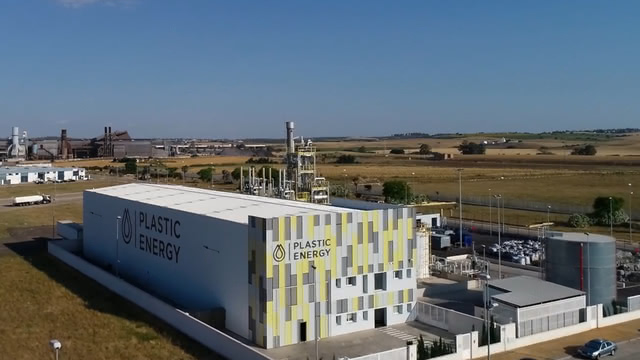
Plastic Energy, a UK-based company, appeared to be one of the more promising players in the plastic pyrolysis industry. It has what few other companies in this space have: two operational pyrolysis plants that have actually recycled plastics. The plants, both located in Spain, have been operational for roughly a decade. Two larger plants, built as joint ventures with the petrochemical companies SABIC and TotalEnergies, have recently completed construction.
However, Plastic Energy's story may soon come to an end. The company is in administration, a UK process for companies in financial peril. Its appointed administrators are currently looking for buyers for the company's assets and technologies.
Most plastic recycling today is what is commonly called mechanical recycling. The key difference to chemical recycling is that it does not change the molecular structure of the input. It takes, for example, PET waste, melts it, and turns it into PET plastic products.
Mechanical recycling works to a certain degree, but it has limitations. It often works well with relatively pure, clean inputs, but it fails with dirty or mixed waste. Due to impurities, recycled plastics are often unsuitable for applications like food packaging.
Recycle what currently cannot be recycled
Chemical recycling involves breaking down complex molecules into simpler components and reusing them as raw materials to produce new chemicals. It promises that it can utilize otherwise non-recyclable waste and that it can produce virgin-quality plastics.
The two main approaches are pyrolysis and gasification. Both involve heating waste to high temperatures to break down the chemical structure. In simplified terms, pyrolysis aims to create a form of oil that can replace fossil feedstocks. With gasification, the goal is to create syngas, a mixture of carbon monoxide and hydrogen.
It should be emphasized that this is a simplified view. Pyrolysis usually also creates gaseous outputs. Some gasification technologies involve pyrolysis as a preprocessing step. Furthermore, there are other technologies under the umbrella of chemical recycling (e.g., depolymerization and solvolysis).
If plastic pyrolysis is used for recycling, the goal is usually to replace fossil feedstocks like Naphtha in steam crackers, which produce plastic precursors such as Ethylene and Propylene.
Putting it like that, it certainly sounds appealing. So why is it so controversial?
Bridging the messy world of waste with a world where parts per billion count
Plastic pyrolysis is not a new technology. The basic principles have been known for decades, and there is a long history of — mostly failed — attempts to use these technologies to improve waste handling.
Any "true" chemical recycling technology that does not burn its product faces the challenge of bridging two very different worlds: waste handling and the chemical industry.
It goes without saying that post-consumer waste is often unpredictable. The key promise of chemical recycling — that it can handle dirty and mixed waste that others can't handle — is also a challenge.
The chemical industry is built on standardized inputs. Its processes are optimized for precise inputs, and it measures impurities in parts per billion.
Chemical recycling is trying to build a bridge between those two worlds. In large parts, this explains why it is so difficult. Creating some form of oil from plastic waste is relatively easy. Achieving the specification for a chemical plant with pyrolysis oil is not.
It also creates conflicting goals. Chemical recycling would be most useful if it could be used with the dirtiest and most unpredictable waste. But it works best with more standardized, more predictable feedstocks. This raises concerns among mechanical recyclers about a competition for the best feedstocks.
Another common criticism is that pyrolysis itself needs a lot of energy. However, it is important to ask what it is compared against. It is uncontroversial that plastic pyrolysis is less energy efficient than mechanical recycling of plastics. However, compared with alternative chemical feedstocks derived from CO2 via Carbon Capture and Utilization (CCU) technologies, the energy requirements of plastic pyrolysis are relatively minor.
Excessive energy requirements of CCU and other challenges of competing alternative feedstocks are reasons why chemical recycling often appears prominently in scenarios for a future fossil-free chemical industry. While waste avoidance, material efficiency, better waste sorting, and improved mechanical recycling all can play an important role, it is difficult to contemplate fossil-free chemicals and plastics without chemical recycling.
Some pyrolysis technologies generate most or all of their energy by burning process off-gases. However, this comes with its own downsides, as it effectively means part of the output is used as a fuel. While this reduces the need for external energy, it decreases recycling rates and increases CO2 production. To optimize recycling rates and positive climate impact, it would be better to generate process energy from external clean energy sources and keep more material, and particularly carbon, in the loop.
Exploding equipment, burning plants, and toxic emissions
The prospect of innovative technologies that address waste problems in better ways has, over the years, attracted quite a few problematic characters. In the more benign cases, this leads to plants that don't work and broken promises, but it does not end there.
When you have ambitious startup entrepreneurs who tackle plastic waste with a "move fast and break things" mentality that meet complex chemical engineering with high pressures, high temperatures, and plenty of potentially dangerous substances, it is perhaps not surprising that this can create a toxic combination. Often, it is quite literally toxic in the form of dioxins, polycyclic aromatic hydrocarbons, volatile organic compounds, carbon monoxide, and a plethora of other toxic substances that can be created as by-products in pyrolysis plants.
There is no shortage of horror stories in the history of this industry. Equipment explodes, plants catch fire, cause excessive air pollution, and, occasionally, CEOs of former pyrolysis companies end up in jail for environmental crimes.
It is not hard to see that such incidents don't exactly help the image of this industry, and the backlash these technologies face is often self-inflicted harm by bad actors in the sector.
If it is burned, it is not recycling
A common criticism is that it is often unclear whether what is called chemical recycling truly recycles anything.
Most people would probably agree that recycling means turning a waste material into a new product. Using waste as an energy source, either directly by burning it or indirectly by burning pyrolysis oil, should not be called recycling.
Almost every recycling process is, to some degree, lossy, and by-products often get incinerated. However, it certainly makes a huge difference whether the share of the input that ends in recycled products is closer to 5 percent or more like 80 percent.
There are plenty of examples, most of them in the United States, where pyrolysis and gasification projects were called "recycling" but were using most of their output to generate energy.
Critics are right to point out that this is deceptive. The term Incinerators in Disguise has been coined to describe such practices.
Historically, the use of pyrolysis oil as an energy source or fuel has dominated, although some players in this space have shifted their focus over time. The name of the already-mentioned company Plastic Energy is testament to that, as it still highlights the company's history of using plastic waste as an energy source.
Even facilities that do some recycling often do so only for insignificant shares of their products. A poster child example of this controversy is a lawsuit that the attorney general of California filed against ExxonMobil in 2024.
The attorney general writes: "At its Baytown Complex — currently the site of ExxonMobil's only active 'advanced recycling' unit — a mere eight percent of the plastic waste ExxonMobil co-processes in its cokers and ethane steam crackers becomes new plastics. The remaining 92 percent of the plastic waste co-processed becomes primarily fuels, which are ultimately destroyed after they are combusted."
The woes of Mass Balancing
Closely related to the question of how much actually gets recycled is the question of mass balancing.
Today's plastic pyrolysis facilities usually blend their pyrolysis oil with fossil feedstocks. For example, a steam cracker may still run primarily on Naphtha derived from fossil oil, but it is mixed with small amounts of pyrolysis oil.
In such a setting, it is not possible to create an output product that, physically, contains only recycled materials. The industry's solution to this is mass balancing: a fraction of the output is declared to be recycled. How exactly to calculate that share, however, is not at all obvious and was the source of a lengthy lobbying dispute within the European Union.
An additional issue with this mass balancing approach is that it raises questions about the scalability of these technologies. Pyrolysis oil is not chemically identical to fossil feedstocks such as Naphtha that steam crackers typically use, and it is often contaminated with pollutants. By diluting pyrolysis oil with fossil Naphtha, these differences and contaminations can be handled.
It is unclear how much pyrolysis oil can practically be mixed into the feedstock of a Naphtha cracker. Utilizing additional cleaning and processing steps and modifying crackers to accommodate the changed feedstock, the share can likely be increased. However, no cracker has ever run on pure or even a large share of pyroylsis oil, as plastic pyrolysis has never been done at scales large enough to make that necessary. Furthermore, it depends on the type of cracker how well it can handle pyrolysis oil input.
If it turns out to be impractical to increase the share of recycled pyrolysis oil beyond a few percent, the dilution approach could create a permanent lock-in to large shares of fossil feedstocks. But even on the more optimistic side — industry sources I spoke to tend to say that going above 50 percent is difficult — it raises the question of how that can be part of a fossil-free future. An option would be to mix pyrolysis oil with Bio-Naphtha or E-Naphtha, for example, from a Fischer-Tropsch process. Scaling these pathways, however, comes with its own challenges.
(The considerations for the competing chemical recycling technology, gasification, are quite different, as this would likely involve a different plastic production pathway using Methanol-to-Olefins technology that would completely bypass traditional steam crackers. Methanol-to-Olefins plants currently exist only in China, which is probably one reason the European and US chemical industries are more focused on pyrolysis than on gasification. A notable exception is Repsol's Ecoplanta project.)
Many European industry organizations endorsed a mass balance approach using a methodology called fuel-use exempt. In 2023, an open letter signed by industry associations like CEFIC, Plastic Europe, and Chemical Recycling Europe promised significant investments in return: "Mass balance fuel-use exempt is crucial to incentivize the rapid scale-up of chemical recycling. An estimated 8-billion-euro investment is in the pipeline by 2030 that would produce 2.8 Megatons recycled plastics via chemical recycling across the different EU Member States."
The complexity of mass balancing in this context comes down to the fact that in most chemical plants, there are not just mixed inputs, but also a range of outputs.
The fuel-use exempt approach means that a plant using recycled feedstocks could freely allocate recycled input shares to its outputs among different products. For example, it would allow allocating a wax that is used in a cosmetic product to a plastic packaging product, even though that wax is not used to make plastics. However, it would not be allowed to allocate the share of a product burned as fuel to generate energy. (If that sounded too confusing, this explanation by Plastic Europe is quite accessible.)
While large parts of the petrochemical industry lobbied in favor of this fuel-use exempt, there were some notable dissenting voices from the industry. Companies operating oil refineries like ExxonMobil favored an approach that would allow reallocating shares from fuels to recycled products. (In the context of the mentioned lawsuit in California, it would not be wrong to say that ExxonMobil has been lobbying within the EU to be allowed to do what they are accused of in the US.)
Earlier this year, EU member states approved a fuel-use exempt mass balance approach for the Single Use Plastics Directive (SUPD). It is expected that this decision will serve as a blueprint for other regulations, such as the Packaging, Packaging Waste Regulation (PPWR). While the latter has not been decided, it seems likely that the industry will get the mass balance approach that is close to what its lobbying organizations asked for.
However, Plastic Europe, one of the lobbying organizations that asked for a fuel-use exempt, sees the implementation in the SUPD regulation as as too restrictive: "As soon as chemically recycled raw materials are used in so-called dual-use processes (e.g., refineries involving both material and energy use), a portion of the non-fossil content must be attributed to the fuel," Plastic Europe wrote in response to questions. According to Plastic Europe, this leads to an underestimation of non-fossil resources, and the organization suggests to not use it as a blueprint for future regulation.
At least for now, it does not look like massive investments into the sector are unlocked.
Many pyrolysis projects in Europe are delayed or cancelled
The whole plastic recycling industry, not just chemical recycling, is currently in a difficult economic situation. Likewise, the European chemical industry is facing difficulties, including plant closures, due to high energy prices and global overcapacities.
While there were signals from the industry for significant investments into pyrolysis-based plastic recycling a few years ago, many of these plans have not materialized or have been delayed.
One of the largest planned chemical recycling projects was planned by Dow and the UK-based company Mura next to Dow's steam cracker in Böhlen, Germany. In 2022, Dow had announced that the plant would be operational by 2025, but construction never started. In 2025, Dow announced instead that it plans to shut down its cracker in Böhlen. Unsurprisingly, that decision also led to the cancellation of the recycling plant.
Mura's plastic recycling technology, which it calls Hydro-PTR, was also supposed to be used in a smaller facility in Wilton, UK, but those plans have also been significantly delayed. Initially, a start-up in 2024 was planned, but it is still not operational.
"The COVID‑19 pandemic from 2020 onwards, followed by the war in Ukraine from 2022, created well‑documented challenges around supply chains, workforce availability, and scheduling across the sector," Mura spokesperson Kim Walker wrote in reply to questions about the delays. "Commissioning is a structured, multi‑stage process, and the focus now is on completing this safely and thoroughly. We'll be sharing further updates in the coming weeks as operations move forward."
A plastic pyrolysis plant by LyondellBasell at its chemical site in Wesseling, Germany, was initially scheduled to start operating in January 2026. It is not operational yet. In its 2025 sustainability report, LyondellBasell writes: "MoReTec-1, our first commercial-scale catalytic chemical recycling plant using our proprietary MoReTec technology located in Wesseling, Germany, is progressing well and is on track for a 2027 start-up." Furthermore, according to the report, the investment decision for a follow-up project with the same technology in Houston (USA) has been delayed.
Carboliq, a German company developing a low-temperature pyrolysis process that has been operating successfully in a pilot plant, wants to build an industrial-sized plant at the chemical site in Dormagen (Germany). Around 40 percent of the investment costs, roughly 20 million €, would have been provided through a funding program by the state of North Rhine-Westphalia. However, Carboliq was unable to find an investor to finance the remaining costs and the company is now facing insolvency proceedings.
The UK-based company Viridor has recently announced plans to shut down its Quantafuel pyrolysis facility in Skive, Denmark.
These are just a few examples. Numerous other plans for pyrolysis plants have been canceled or are not progressing.
Plastic Energy: one of the more successful companies in an industry littered with failures
Possibly one of the most notable developments lately is the situation of the UK-based company Plastic Energy. It is widely considered one of the more successful actors in an industry whose history is littered with failed projects.
Plastic Energy's first two plants started operating in 2016 and 2017. The technology, however, has a history dating back to the 1990s. A predecessor was developed in Japan and initially marketed by an Australian company called Ozmotech. Ozmotech licensed the technology to another company called Cynar, which built the two Plastic Energy plants in Spain. Both Ozmotech and Cynar no longer exist.
As far as I could find out, there have been no reports about any fires, explosions, or toxic emissions from Plastic Energy's plants in Spain. Plastic Energy has also partnered with chemical companies and brands like Magnum, Heinz, and Philadelphia that marketed the use of mass-balanced recycled feedstocks for some of their product packaging. In recent years, Plastic Energy entered partnerships infowith petrochemical companies and built two much larger plants that recently came online, one with TotalEnergies in Grandpuits (France), the other with SABIC at the chemical site Chemelot in Geleen (Netherlands).
At least from the outside, Plastic Energy looks like one of the more successful actors in this industry. However, some people I spoke to were more skeptical. Kevin Carl, a scientist at RWTH Aachen familiar with the chemical recycling industry, pointed out that Plastic Energy has never published any details about its production facilities. While Plastic Energy undoubtedly produced some pyrolysis oil used in some products, there is no public data on the actual operating hours or the volumes of inputs and outputs processed at Plastic Energy's plants in Spain.
Some industry insiders are also skeptical of the technological approach that relies on a semi-batch process rather than a fully continuous operation. In a LinkedIn post, Charles Grispin, the CTO of a competing pyrolysis company, PolyFuel, highlights this and shares details about the history of Plastic Energy, Ozmotech, and Cynar.
In late April this year, Plastic Energy entered administration, a legal process in the United Kingdom for companies experiencing financial difficulties. According to Plastic Energy's administrators from the company FRP Advisory, this affects two companies registered in the United Kingdom, Plastic Energy Finco Limtied and Plastic Energy Limited: "Administrators have been appointed due to the cash flow challenges faced by both companies. There was insufficient liquidity available within the group to affect a turnaround plan."
The company operating the two plants in Spain (Plastic Energy S.L.U.) has, according to FRP Advisory, "not entered into any insolvency process and those plants continue to operate as normal."
FRP Advisory is now looking for buyers for Plastic Energy's assets. Despite not being directly part of the administration process, this includes the subcompany owning the plants in Spain. (You can find the complete statement from FRP Advisory at the end of the article.)
If Plastic Energy ceases to exist, it also raises the question of what will happen to its joint ventures with TotalEnergies and SABIC. Plastic Energy's administrators from FRP Advisory write: "The shares in the Joint Ventures are owned by Plastic Energy Finco Limited, which was one of the two UK entities to enter administration on 27 April 2026."
Seemingly unimpressed by its difficult situation, Plastic Energy celebrated the official opening event of the plant it built in collaboration with TotalEnergies in Grandpuits, France, on its social media accounts. The opening event took place on June 10th, months after Plastic Energy entered administration.
Plastic Energy's new plant in the Netherlands at the Chemelot chemical site in Geleen is impacted by broader developments within its partner company SABIC. The Saudi Arabian company recently sold many of its European assets, including its steam cracker and other plants in Geleen, to the investment company Aequita from Munich, Germany. The asset sale was perceived as priced very low, indicating the difficult situation for many European chemical plants.
Aequita formed a new company, Velogy, to operate the plants bought from SABIC and additional assets Aequita acquired from LyondellBasell. Whether SABIC's shares in the joint venture plant with Plastic Energy were part of the sale to Aequita is unclear. Neither SABIC nor Aequita answered to questions. (LyondellBasell's plants in Wesseling — where their previously mentioned MoReTec‑1 plant is located — are not part of the assets acquired by Aequita.)
This development certainly raises questions about how it affected Plastic Energy's prospects, as SABIC no longer owns the steam cracker in Geleen that was supposed to process the pyrolysis oil. This, to some degree, echoes the development of Mura's and Dow's plans in Böhlen, Germany, where the closure of the cracker ended their plans for a chemical recycling plant.
Plastic Energy CEO was optimistic due to upcoming EU PPWR regulation
In an interview with the Deep Tech Leaders podcast that was published shortly before Plastic Energy's financial difficulties became known, the company's CEO Ian Temperton was quite optimistic about Plastic Energy's prospects due to upcoming EU regulation.
The interview is worth listening to in full, and Temperton outlines details of Plastic Energy's process that are not widely publicized. He notes that its process targets a relatively specific subset of dirty plastic waste that would otherwise go to incineration or landfills: "That involves largely flexible plastics, films, sometimes they're referred to as soft plastics. There are a number of forms of plastics which can be recycled in other ways, which we don't take."
Regarding Plastic Energy's offtake, Temperton explained that the majority of the demand was created by voluntary commitments, for example, from brands that would want to market recycled content in their products. "What we are seeing is a transition from those voluntary commitments to a regulatory requirement, particularly in Europe," the Plastic Energy CEO said. "There is something called the Packaging and Packaging Waste Regulation (PPWR) in Europe, which will create from 2030 onwards a range of mandates or targets for different sorts of packaging."
With those upcoming requirements and the expectation that the PPWR regulation will, as explained earlier, likely allow mass balance with the fuel-use exempt methodology that large parts of the industry demanded — even if it does not implement the industry's wishes in every detail — it seems surprising that one of the more successful players in the plastic pyrolysis space is in such financial trouble. If the petrochemical and plastic companies believe, as their scenarios and statements indicate, that chemical recycling and pyrolysis are key technologies for their future, one might expect that a company like Plastic Energy would not have problems finding investors willing to bring in money to bridge a few difficult years.
Statement from FRP Advisory (Plastic Energy's administrators): Geoff Rowley and Patrick Donnan of FRP Advisory have been appointed as joint administrators of Plastic Energy Finco Limited ("PEF") and Plastic Energy Limited ("PEL") on 27 April 2026.
PEL and other group companies owned by PEF is a technology company involved in creating a circular economy for plastics and runs two recycling plants in Spain, which are not part of any insolvency process.
Administrators have been appointed due to the cash flow challenges faced by both companies. There was insufficient liquidity available within the group to affect a turnaround plan.
PEL has developed a recycling process that converts end of life plastic into feedstock, helping replace fossil fuels in the production of virgin plastics while diverting plastic waste from landfill and incineration — supporting compliance with current and emerging EU rules such as the Extended Producer Responsibility (EPR) and the Packaging and Waste Regulation (PPWR).
Plastic Energy S.L.U., the entity which owns and operates the two plastic recycling plants in Seville and Almeria, Spain, has not entered into any insolvency process and those plants continue to operate as normal.
The administrators will continue to trade the group's business whilst they seek to find a buyer and employees are being retained.
Geoff Rowley, joint administrator and partner at FRP, said: "Plastic Energy has developed market leading recycling processes since inception, but has suffered from a European market downturn and accordingly has been unable to evidence sustainable operations. Our goal is to sell the group's primary assets, including the IP and patents held, the shares in group entities (including Plastic Energy S.L.U. holding the recycling plants) and the joint venture interests, to maximise returns for creditors."
Update (August 2026): A few weeks after this article was published, Plastic Energy announced in a press release that the company has a new ownership structure. While it does not go into details, it implies that the company may have, for now, found a way to continue its business. Plastic Energy also announced that its founder, Carlos Monreal, will return as the company's CEO.
Author: Hanno Böck
Short news
-
SunGas Renewables and the Maersk-backed company C2X have announced the cessation of the Beaver Lake Renewables project in Louisiana (USA). You may also want to check my brief analysis on LinkedIn and this podcast interview with SunGas Renewables that was published a few months before the cancellation.
-
This interview with Alex Hogan, CEO of the fossil-free plastics company Vioneo, which recently announced it is going to build its first plant in China and not in Europe, is worth reading. I interviewed Hogan in 2025 and covered Vioneo's recent move and, more broadly, Green Methanol technologies in China in a recent newsletter.
-
SaltX and Holcim have produced Portland-quality cement clinker in a fully electrified process. I covered SaltX and the potentially promising combination of electrification and CCS for cement plants back in 2023.
-
Heidelberg Materials runs the world's first CCS facility at a cement plant in Brevik, Norway. However, in its first months of operations, the company faced significant technical challenges and captured only a fraction of the intended CO2 volumes, as an international media collaboration reports in Der Spiegel (Germany) (also in English), Mediapart (France), and Le Soir (Belgium). (I had a small role in this investigation.)
-
Microsoft has recently "paused" purchasing Carbon Removal credits. Microsoft was the largest buyer in the voluntary carbon removal market.
-
Stegra, which builds a hydrogen-based steel plant in Boden, Sweden, recently closed a 1.4 billion € funding round.
-
Philipp Hauser, a friend of the newsletter, launches the organization CCycle and outlines his views on how to use biomass to improve industrial competitiveness and emission reduction.