A promising Plastic Recycling company facing Bankruptcy
Carboliq, a company developing an advanced plastic recycling process, is in an insolvency process. The history of its technology goes back decades and is full of interesting and sometimes absurd anecdotes. Carboliq's technology operates at lower temperatures and milder conditions than most other chemical recycling processes, which comes with some advantages.
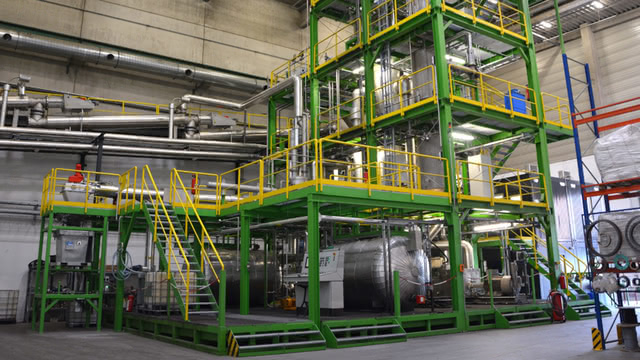
In June 2026, Carboliq, a company developing an advanced plastic recycling process, faced insolvency. Whether Carboliq still has any future is, at this point, highly uncertain. Its technology looks promising, but it was unable to find an investor for an industrial plant.
Carboliq's technology operates at lower temperatures and under milder conditions than most other chemical recycling processes, which has some advantages and makes it a rather unique approach.
The history of Carboliq's technology can be traced back to research at the University of Tübingen in the 1990s and the work of a former Siemens engineer who later started a company named AlphaKat.
AlphaKat's inventor started his research career in East Germany, back then the Soviet-aligned "German Democratic Republic" (GDR / DDR). He moved to West Germany and started working for Siemens in 1967.
In its early days, AlphaKat's founder came into contact with a group of engineers experienced in building customized industrial plants. They later formed their own company, initially called NanoKat Engineering and renamed to AlphaKat Engineering shortly afterward.
The two companies named AlphaKat would later part ways. AlphaKat Engineering was eventually renamed again and is, today, known as Recenso. Carboliq is a spin-off from Recenso.
The Gasoline from Kittens Hoax
In 2005, an article in the tabloid newspaper Bild brought AlphaKat and its founder international fame, albeit probably undesired.
AlphaKat's founder pitched his technology with the promise that it could turn any form of plastic waste or biomass into diesel fuel. A promise that was almost certainly not substantiated by the technology at the time.
Bild's "journalists" concluded that if a technology can process any kind of biomass, that also means it can process cats. Because, obviously, cats are a form of biomass. Therefore, this guy is making fuel from cats.
Based on that thorough investigation, Bild published an article about the German inventor who can turn cats into gasoline. Apart from the fact that Alplhakat's inventor never claimed to make gasoline — he was always talking about diesel — almost everything else in the article was wrong, too.
The article was quickly debunked by the watchblog Bildblog. Still, the story found its way into the international press, with even CNN spreading it.
Although the story was debunked almost immediately, it lived on for years. For example, the Huffington Post reported on it years later in 2008 without mentioning that it was entirely false.
There is a plot twist to the story about fuel from cats. In 2009, the City of Hamburg commissioned a study on the KDV technology that I was able to get my hands on. Researchers at HAW Hamburg had experimented with technology and catalysts provided by AlphaKat.
The study indicates that turning arbitrary biomass into diesel fuel was neither observed nor particularly plausible with the technology, and that it would only work with plant oils and specific types of plastics. It explicitly lists biomass with protein content, like animal meal and other animal waste products, as unsuitable feedstocks for the process.
I talked to Thomas Willner, a professor at HAW Hamburg and author of that 2009 study. The KDV process and similar technologies require a starting oil in the reactor. This creates a challenge when evaluating the process. If the process runs for short amounts of time, it is not obvious what share of the product output is starting oil and what is actually processed material.
During demonstrations that AlphaKat often ran at its pilot facility in Eppendorf, Germany, it was not visible whether the inputs would actually end up in the product oil. That would require either a more detailed analysis of the output molecules, e.g., through radiocarbon dating, or longer operating times.
AlphaKat's founder would make further media appearances. An interview with the German regional public broadcaster MDR (probably 2007) does not mention cats, but is nevertheless irritating.
"In Germany, there is an institute that has made it its mission to prevent this process," AlphaKat's inventor said in that interview. "Without actually examining the process itself, they commissioned an expert report intended to demonstrate that it should not be used. They then shared this information with all banks and funding agencies."
The most remarkable fact is that the interviewer on a public broadcasting program apparently saw no need to ask any critical questions and seemed to agree: "There are — and this really must be stated quite clearly — those in Germany who are obstructing this technology."
The institute Koch is referring to is the German Federal Office for Agriculture and Food (Bundesanstalt für Landwirtschaft und Ernährung), and I was able to get my hands on that expert report, too.
The expert report gives a broad overview of various biomass-to-liquid processes pursued at the time. It spends around two pages elaborating on AlphaKat's KDV process. Apart from describing the general idea, it refers to an analysis of a sample performed by the University of Rostock that found that the product had similarities to diesel fuel but did not comply with existing diesel norms. Particularly noteworthy was an extremely high sulfur content.
AlphaKat managed to attract various buyers and licensors in many countries. A scientific paper published in 2017 contains an incomplete lists of 12 plants around the world with AlphaKat's KDV technology. One can find content about AlphaKat on YouTube, with many of its fans giving glowing reviews about the technology.
Countless companies formed partnerships with AlphaKat. A rather unexpected crossover of the usually unrelated special interests of the author of these lines is a Swiss company named Forans that was both marketing AlphaKat's KDV technology and selling dubious encryption products. (Some of the other companies that were AlphaKat partners include Waste2Oil/Germany, WAKA-FIS/Switzerland, Alpha-Energy/Mongolia, Essential Umwelttechnologien/Germany, American Reneable Diesel/USA, and Asia Clean Diesel/Singapore.)
US waste management company wanted to build 600 KDV plants
One of the more significant projects AlphaKat initiated was a plant in Massachusetts in the United States. In 2007, AlphaKat formed a joint venture with a US-based company named Global Energy, to be called AGEI (AlphaKat - Global Energy). Global Energy has itself a colorful history. It started as a smartcard and microprocessor company called Global Smartcards, but later pivited into the Oil and Gas business. After selling its oil and gas assets in 2005, it pursued biofuel feedstocks in Ethiopia, which it also sold later.
Through the AGEI joint venture, AlphaKat sold a KDV plant to Covanta, a major US waste management company today known as Reworld. Covanta had big plans with the AlphaKat technology. According to a US SEC document, Covanta had agreed to order 600 KDV plants if tests with the first unit were successful.
Furthermore, Global Energy struck a deal with Rafael Advanced Defense Systems, a weapons manufacturer from Israel. According to the agreement, "Rafael will have an exclusive right to use the KDV technology for military uses, for applications relating to defense articles."
However, AlphaKat's partners in these deals reported disappointing results. The SEC document mentions the "failure [...] to reach satisfactory results in the pilot experiments". Global Energy had to write off 781,000 US dollars that it had paid in advance for a second plant.
A plant AlphaKat had sold to the Ethiopian state-owned company MetEC was mentioned in media reports about a corruption investigation into a former MetEC CEO in 2018. According to Addis Fortune, the police alleged that an AlphaKat plant was procured without a proper bidding procedure. (The article does not imply any wrongdoing on AlphaKat's side.)
Whether any of the AlphaKat KDV plants ever achieved stable operations remains unclear. Attempts to reach out to AlphaKat's follow-up companies went unanswered.
AlphaKat's previous web page has been offline since late 2019. Web pages of AlphaKat subsidiaries in Canada and Cyprus can still be found. The latter indicates that a KDV plant was planned in Koshi, Cyprus, and even provides a "Strictly private and confidential" investor pitch deck from PwC. There have been no updates since 2018.
After AlphaKat's web page disappeared, it temporarily redirected to a company named Tachlis Global Energy (TGE). While TGE does not mention AlphaKat as the origin of its technology, it appears to market a similar technology and its German pilot plant is located at the same address as the previous AlphaKat pilot plant in Eppendorf.
TGE's leadership team consists of a former oil industry executive and former CEO of the Coffeyville refinery in Kansas, a former motivational speaker who, according to his speaker bio, was previously a diamond trader, and a former officer of a now-bankrupt Canadian telecommunications company named World Affinity Telecom. The latter is also listed as AlphaKat's current CEO.
While Tachlis Global Energy clearly has ties to the former AlphaKat, it is not targetting plastic waste or biomass. Instead, its goal is to process side streams from oil refineries.
At this point, one may certainly ask why we are even talking about this. An inventor who turns trash into fuel and who sees his invention suppressed sounds like the kind of thing that happens on a regular basis. (You may be reminded of this story.)
Why should we bother about a company that apparently no longer markets its original technology and that failed to live up to its promises?
The two companies named AlphaKat parted ways
The reason we might care is the "other" AlphaKat company, AlphaKat Engineering, the company that would eventually be renamed to Recenso and create Carboliq.
Recenso would later also work on other recycling technologies and acquired an electronic waste sorting and metal recycling business. But its main focus remained waste and biomass conversion technology that it later called Catalytic Tribochemical Conversion (CTC). Its technology was a direct descendant of AlphaKat's KDV technology.
Christian Haupts, managing director at Recenso, told me that he and his partners quickly realized that they found AlphaKat's inventor difficult to work with. Nevertheless, they concluded that there was something worth pursuing in the KDV technology.
The two companies eventually parted ways due to conflicts while building a project in Barrie, Canada. The plant in Barrie, known under the brand name Nano Fuel Solutions, was built for the electronic waste processing company GEEP. It was supposed to utilize plastic residues from electronics.
Recenso's Christian Haupts was honest enough to tell me that this plant in Canada never achieved stable industrial operations. Small volumes of liquid fuel produced was used in machines and vehicles within the waste-processing complex. GEEP was eventually acquired by another company named Quantum Lifecycle Partners, and the Nano Fuel plant was shut down in 2012.
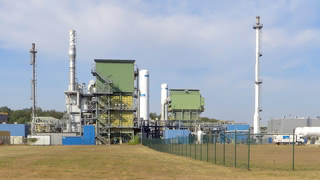
But the company that later became Recenso was not done with the technology and found investors to fund its own pilot plant. The plant, built under the brand name Dieselwest, was built on the premises of the recycling company Ecowest in Ennigerloh, Germany.
The Dieselwest plant started trial operations in 2011, and high oil prices at the time created some interest in the technology. Even Bild reported on it without mentioning any cats. In 2015, the Dieselwest plant was listed as a project for an EU investment offensive. However, in 2016, the initial investor had lost interest in the project and wanted to dismantle the plant. Recenso bought it back for a symbolic price.
According to Recenso's Christian Haupts, a major achievement during the Dieselwest phase was to reduce the high sulfur content that was highlighted in earlier reports on the KDV technology.
Pivit from Waste-to-Fuel to Plastic Recycling
In the following years, two developments led to a new focus for the project formerly known as Dieselwest. Environmental organizations became more vocal in highlighting that it was incorrect to call waste-to-fuel technologies recycling. The fuel was eventually still burned and would release all of its Carbon content as CO₂. Burning plastics, even with an intermediate step, still means burning fossil fuels.
The chemical industry, at least in their reports, was increasingly looking for alternative, fossil-free feedstocks. Many industry roadmaps rely heavily on chemical recycling technologies as the source of future feedstocks.
In 2018, BASF announced that, for the first time, it made chemically recycled products at its steam cracker in Ludwigshafen. BASF used oil inputs produced by Recenso's Dieselwest plant in Ennigerloh.
Recenso's spin-off Carboliq would subsequently market the technology as a solution to recycle otherwise unrecyclable plastic waste and turn it into new chemical feedstocks. In 2020, the food packaging company Südpack became a partner and Carboliq's largest investor.
The Dieselwest plant became Carboliq's pilot plant, although with some major changes. Notably, during the transition from Dieselwest to Carboliq, a distillation column that could directly output various fuel products like diesel with a so-called quench. As a result, Carboliq's process output is a mixed oil.
At the time, Carboliq and other companies within the broader chemical recycling space were expecting that if they could show their technology works, they would be able to find interested investors from the chemical industry a few years later. Certainly, that was what the chemical industry implied in its communication and its roadmaps.
According to Stephan Aschauer, a now-former Carboliq engineer I talked to, the pilot plant was in "hot" state for around 25.000 hours and actually "on stream" processing input for around 20.000 hours. "This was achieved through the reliable operation of the turbines for energy input, which were developed in-house by Recenso, and constant process improvement," Aschauer said. (Those numbers are only referring to the Carboliq years since 2021, not the previous experiments under the Dieselwest brand.)
In 2025, it looked like Carboliq was about to upscale its technology. As part of an industrial support program, the state of North Rhine-Westfalia was willing to support the construction of an industrial-sized plant with the Carboliq technology at the chemical site Dormagen. It was planned with an initial capacity to process around 17,500 tons of plastic waste and a later stage around four times that size. The state of North Rhine-Westfalia agreed to provide 20 million euros, around 40 percent of the expected initial investment costs, with the expectation that private investors would fund the remaining 30 million.
Nobody wanted to invest.
Carboliq was in talks with two potential investors until recently, but those talks eventually failed. In June, the insolvency proceedings started. In August, Carboliq's remaining employees were laid off.
A spokesperson from Südpack, Carboliq's main investor, informed me: "The oil conversion technology has impressively demonstrated its functionality, and we remain convinced of its technological potential. However, the next stage of development—scaling up to a large industrial level—required a significantly stronger financial foundation as well as integration into the value chains of the chemical or waste management industries. Unfortunately, our search for suitable major investors yielded only rejections."
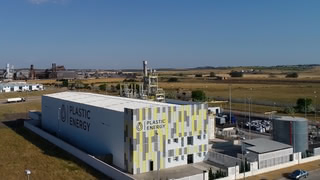
Roadmaps both from the chemical and plastic industry and from independent researchers see an important role for chemical recycling to replace fossil feedstocks. However, investments into the sector currently don't reflect that. Industry groups tend to point to insufficient regulation creating demand for recycled content. An important and, within the EU, still open question is how partially recycled content is accounted for through so-called mass balancing. (I discussed this in more detail in a previous article about Plastic Energy, another chemical recycling company.)
Lower temperatures, higher yields
Carboliq's technology has some key differences from most other chemical recycling approaches.
After a pre-sorting process intended to remove unwanted materials like stones and metals, plastic waste is fed into a reactor and heated. This breaks down materials into simpler molecules. The temperature stays below 400°C, which is lower than most other chemical recycling technologies. The materials remain in a liquid phase during the reaction and are condensed only at the end of the process.
Keeping temperatures relatively low reduces the formation of toxins like dioxins which are often a concern with high-temperature waste-processing technologies. Furthermore, Carboliq avoids high-pressure processes, which reduces operational risk and safety concerns. (Exploding chemical recycling facilities are not unheard of.)
Most conventional plastic pyrolysis plants operate in a way that creates a mix of liquid, gaseous, and solid outputs. The gases often contain a significant share of the material and energy. While it is, in principle, possible to utilize both liquid and gaseous outputs to make new feedstocks, this is rarely done. Most pyrolysis plants burn their gas output to generate process energy, often claiming that this reduces their energy needs. While this is technically correct, it also reduces their yield and increases CO₂ emissions.
Carboliq's process tries to avoid these issues by optimizing the process towards liquid outputs. The focus on liquid outputs leads to relatively high yields and reduces losses of carbon-containing materials and, thereby, CO₂ emissions.
The low temperature also has downsides. The reaction is relatively slow, which means that, compared to competing processes with higher temperatures, larger reactors are required to process the same amount of material.
The energy input in Carboliq's process happens entirely through turbines developed in-house that pump liquid material around and create friction. This naturally allows process electrification. The reliability of the turbines has been questioned in some of the studies for the older KDV technology, but Carboliq says they have not seen such issues with their current design.
With its lower temperatures and continuous process, Carboliq's approach differs from most other technologies in the chemical recycling space. Another significant low-temperature process is the one developed by Plastic Energy, but that is a batch process, which makes it notably different.
Overall, these liquid-phase processes at lower temperatures are often called direct liquefaction.
Carboliq and Recenso have been relatively transparent about their process and have often shared data with scientists and at conferences.
A 2017 publication by the German Environmental Agency (Umweltbundesamt) contains production data about trial runs of the pilot plant, which was, back then, still called Dieselwest.
A more recent publication from 2024 contains anonymized, but very detailed data about two liquefaction processes. While the data is not attributed to a specific company, the process anonymized as "Verölung II" has striking similarities to Carboliq's process. The data looks relatively favorable and confirms the higher yields of direct liquefaction when compared with pyrolysis.
Another study, published in 2025 in the Journal of Sustainability, compares Carboliq's process to waste incineration in a lifecycle analysis and also contains detailed data.
OMV postponed project just months after Innovation Fund grant
A similar technology is the ReOil process developed by the Austrian oil company OMV. The company wanted to build a massive plant with a capacity to process 200,000 tons of plastic waste. In March 2025, OMV's ReOil 25000 project was selected to receive 81 Million Euros from the EU Innovation Fund.
However, only a few months later, in October 2025, OMV postponed the project. OMV wants to reconsider whether it will actually build the plant after 2030.
That itself is a remarkable chain of events: an oil company applying for one of the most important funding programs for industrial decarbonization, being selected, and then putting the project on hold just a few months later. According to the EU Funding and Tenders Portal, the project is still "ongoing".
While this example is particularly extreme, many projects within the Innovation Fund follow a similar development where initial grand plans stall for years without progress. It is worth asking whether the Innovation Fund needs mechanisms to prevent abuse from projects blocking funding resources that could be used elsewhere.
With ReOil in limbo, Carboliq was the only company still working on a technology like this. If Carboliq's approach is valid and promising, it would be quite unfortunate if its progress gets lost due to insolvency and a lack of investors.
"Given that there is a large variety of different plastic waste streams, it makes sense to pursue different approaches and try different technologies," Kevin Carl, a researcher at RWTH Aachen who is familiar with the chemical recycling industry, told me. "Carboliq's direct liquefaction technology is a potentially promising approach to improve plastic waste handling."
Kevin Carl also indicated that he had a positive impression from direct interactions with engineers from Carboliq and Recenso. However, he also voiced some criticism about details of the process. For example, he is skeptical about the energy input through turbines.
Kevin Carl is part of a research group at RWTH Aachen that has a reputation of being notoriously skeptical about chemical recycling technologies. His relatively positive view of Carboliq's approach is, therefore, noteworthy. (The head of this notorious research group is one of the authors of the previously mentioned publications by the German Environmental Agency / Umweltbundesamt.)
While Carboliq is in an insolvency process, no final decision to dissolve the company has been made yet. Recenso, Carboliq's parent company, has indicated that it will still pursue the technology and that the project in Dormagen may still be realized. However, that obviously still depends on being able to find investors.
You can find some of the mentioned studies in the document archive.
Author: Hanno Böck
Brief
-
According to CBC Canada, Enerkem failed to properly decommission its waste-to-methanol / gasification plant in Edmonton, Canada, after it was shut down in early 2024. The local environmental authority, Alberta Environment and Protected Areas, issued an order indicating that, during site inspections, leftover toxic chemicals were found. Groundwater and soil were contaminated. (I covered Enerkem's history and various projects in a previous newsletter.)
-
The city of Zürich is, for now, stopping development of a CCS project at its Werdhölzli sewer sludge incineration plant after a failed call for tenders. In a 2024 referendum, 75 percent of Zürich's voting citizens had approved the project.