Yara's CCS project shows limitations of Blue Hydrogen and Ammonia
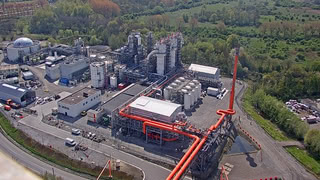
Yara's fertilizer plant in Sluiskil in the Netherlands is the second customer of the Northern Lights CO₂ storage site in Norway. While it is one of the largest CCS projects in Europe, it avoids only around a quarter of the plant's CO₂ emissions.
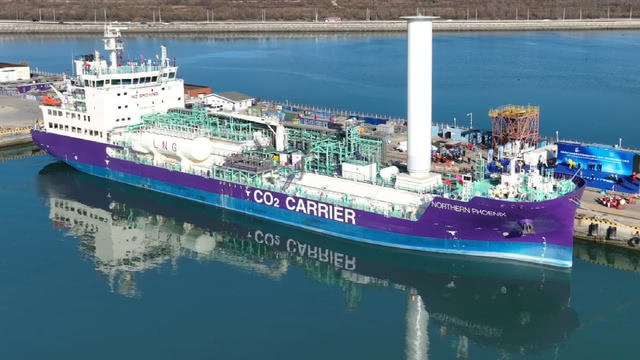
On September 7th, 2026, fertilizer producer Yara inaugurated a Carbon Capture and Storage (CCS) project at its Ammonia plant in Sluiskil in the Netherlands. Yara plans to ship around 800 thousand tons of CO₂ per year to the storage site Northern Lights in Norway.
Ammonia production is the largest industrial consumer of Hydrogen. These days, almost all of that Hydrogen is made from fossil fuels. This emits large amounts of CO₂, and it is the main reason why Ammonia production is very emission-intensive.
In 2023, Yara signed an agreement with the Northern Lights CO₂ storage site in Norway. Located in Øygarden near Bergen, Northern Lights provides CO₂ storage services by ship to industries all over Europe. It is operated by Equinor, Shell, and TotalEnergies.
It has been a bumpy road for Northern Lights during the past years. Partner projects have faced cost increases, delays, and underperformance. While such challenges are, to some degree, expected for first-of-a-kind projects, they certainly show that CCS is not cheap or easy to implement. Yara's CCS plant is the second operational Northern Lights partner project, with the first being the cement plant Brevik in Norway.
The ship left without any CO₂ on board
Northern Lights operates a fleet of dedicated CO₂ carrier ships. Guests of the inauguration ceremony at Yara's plant in Sluiskil, which included the Dutch and Norwegian prime ministers as well as EU climate commissioner Wopke Hoekstra, could watch the Northern Pioneer, one of the CO₂ carriers dedicated to Sluiskil.
While CO₂ fills interim storage containers, the ship was there only for the ceremony. As Yara confirmed to me, the Northern Pioneer left Sluiskil without any CO₂ on board and is currently docked in a port in Denmark. According to Yara, actual CO₂ shipments will start "soon".
The Ammonia and fertilizer plant in Sluiskil is Europe's largest Ammonia plant. Ammonia is a chemical primarily used to make various fertilizer products. Ammonia synthesis through the Haber-Bosch process is an important way to make nitrogen usable for food crops.
Around 25% of the plant's CO₂ emissions
The plant emits slightly over 3 million tons of CO₂ annually. If the CCS project achieves its projected capture volumes of 800,000 tons, it will therefore avoid around a quarter of the plant's emissions.
"Not all CO₂ generated at the site is available for storage. In ammonia production, CO₂ is produced in two main forms. Approximately 60–70% arises as relatively pure process gas, while the remaining 30–40% comes from more diluted flue gas streams," Yara spokesperson Kaia Jarlsby explains.
It is worth breaking that down, as it helps to understand the challenges of implementing CCS at ammonia plants, particularly when retrofitting existing plants.
An important and often neglected fact about CO₂ capture is that the cost, effort, and energy needed depend largely on the concentration of CO₂ in an emission source.
Hydrogen production from fossil gas usually happens in a process called Steam Methane Reforming. It turns Methane gas into Hydrogen and CO₂. Concentrated CO₂ is a direct by-product of Steam Methane Reforming. This is the "relatively pure process gas" that Yara's spokesperson referred to.
However, Steam Methane Reforming requires energy in the form of heat, which is usually also generated using fossil gas. Burning fossil gas results in a highly diluted stream of CO₂ mixed with Nitrogen, Oxygen, and other gases. CO₂ concentration can be below 5 percent. Capturing CO₂ in such a scenario, also called post-combustion carbon capture, requires an expensive and energy-intensive gas separation step, usually using amine scrubbing technology.
This is the key reason why gas-fired power plants and other gas-fired processes, at least in their existing form, are some of the worst targets for any form of carbon capture.
In a Steam Methane Reformer, we therefore have two main emission sources: process CO2, which makes up around two-thirds and is relatively easy to capture, and post-combustion CO₂, which makes up around another third and is expensive and difficult to capture.
Existing CO₂ used for Urea production and Greenhouses
But there is another twist. Given that it is relatively easy to capture the process CO₂ in Ammonia and Hydrogen plants, it is often already being done — not to avoid emissions, but to serve industrial needs for CO₂ gas.
Yara's spokesperson Kaia Jarlsby wrote: "A significant share of the process CO₂ is already captured and utilized in existing applications, such as in urea production or supplied to industrial customers and nearby greenhouses. This portion is therefore not emitted and not part of the remaining emissions addressed by CCS."
Urea is one of the products commonly made from Ammonia and is used as a fertilizer. Making Urea requires CO₂. In a sense, Urea production is a Carbon Capture and Utilization process.
Given that Ammonia plants produce concentrated CO₂ and Urea production, a direct downstream process, requires CO₂, it is an obvious choice to use CO₂ from Ammonia plants to make Urea.
Furthermore, because Ammonia plants produce easy-to-capture CO₂, they commonly sell it to other industries. Whether it's the CO₂ used in greenhouses, the bubbles in sparkling water, or the CO₂ used in cooling equipment, it often comes from the Ammonia industry. According to a Yara presentation, 900,000 tons of CO₂ from its Sluiskil plant are used in its Urea production. 500,000 tons are sold for other uses.
Almost all of that "used" CO₂ eventually still ends up in the atmosphere. Therefore, under EU regulations, this CO₂ is still accounted for in the total emissions of an Ammonia plant.
When considering how deep emission reductions for Hydrogen and Ammonia production with CCS are possible, we are faced with two challenges. The easy-to-capture process CO₂ is so convenient to access that CCS is competing with existing uses of CO₂. On the flip side, around a third of the emissions are from a diluted CO₂ source that is prohibitively expensive to capture.
It is important to realize that the challenge that existing Hydrogen and Ammonia plants are already CO₂ sources for both internal and external uses is a challenge for any form of CO₂ reduction. If an Ammonia plant switches to Hydrogen production via electrolysis, aka "Green" Hydrogen, those other uses would also need a different CO₂ source.
Deep decarbonization of the Ammonia industry requires, therefore, a more systemic approach that includes other industries. A possible solution is to redirect CO₂ from Biomethane plants, another source of highly concentrated CO₂, to Urea production facilities and other industrial CO₂ consumers.
Another possible option could be to reduce the use of Urea fertilizer and replace it with carbon-free alternatives. However, that raises other questions regarding safety and downstream N2O emissions.
High capture rates only plausible with entirely different technologies
So-called "Blue" Hydrogen and Ammonia production with CCS is often pitched as a cheaper and more readily available option than "Green" Hydrogen made via electrolysis. However, achieving deep emission reductions for Hydrogen and Ammonia production with CCS may require switching to entirely different technologies.
A technology that could make capturing larger amounts of CO₂ easier is called Autothermal Reforming (ATR). Instead of providing energy through external heat, it generates energy internally through partial oxidation. This requires supplying pure Oxygen to the process. (ATR is similar to gasification technologies that have been a recurring topic in this newsletter.)
Another alternative could be to electrify Steam Methane Reforming. While the feedstock would still be Methane, the process heat could be generated with clean electricity.
However, neither is a simple add-on to existing Steam Methane Reforming plants. A major overhaul of existing assets or even entirely new plants would be required to implement such solutions. Furthermore, neither ATR nor electric SMR would address upstream Methane emissions of the fossil gas infrastructure.
Given these inherent limitations, it is worth asking whether a direct switch to electrolytic, "Green" Hydrogen would be a better solution. It would avoid fossil lock-ins and provide a clear path to deep emission reductions. (Yara had planned to fully switch an Ammonia production plant in Porsgrunn, Norway, to Green Hydrogen. However, those plans were stopped in 2024, as I've also discussed in my previous newsletter.)
Reducing the emissions of a major industrial plant by a quarter would be, undoubtedly, significant. Whether those emission reductions will be realized remains to be seen. The European Union has set the goal to become climate neutral by 2050. A 25 percent reduction can only be a first step, and it is not clear what the further steps look like.
If such CCS projects are a dead end without a plausible pathway to deep emission reductions, one might ask whether it is worth the investment, subsidies, and effort.
Author: Hanno Böck
Brief
-
The Institute for Energy Economics and Financial Analysis (IEEFA) has published an analysis and overview of electric primary steelmaking options. Direct electrolysis of iron ore is a less mature but potentially promising alternative to Hydrogen-DRI. Players in this field include the Siderwin / Volteron technology that I covered previously and the molten oxide electrolysis process developed by Boston Metal. The latter has lately focused on high-value metals like Niobium, and, due to technical problems at a facility in Brazil, ran into difficulties and had to lay off staff.
-
Chlorine production produces Hydrogen as a by-product, as it also uses a form of electrolysis. This by-product Hydrogen, if produced with green electricity, could also be considered to be "Green" Hydrogen. Nobian plans to market Hydrogen from its chlorine plant in Rotterdam as RFNBO-compliant (the EU regulatory framework for Green Hydrogen) in partnership with Air Products.
-
Fuel trader Ambrian Energy plans to build a CO₂ export terminal in Bremen, Germany, called Carbon Bridge. It is located near a waste incinerator with plans to implement CCS.
-
Goldwind has produced a first batch of biomethanol from its new plant in Inner Mongolia, which is delivered to South Korea. Goldwind's plant is among the largest green Methanol projects in China.
-
The chemical recycling company Plastic Energy sold its stake in its plant in Grandpuits, France, to TotalEnergies. The plant was initially a joint venture between the two companies. I covered Plastic Energy and its recent financial difficulties in June.